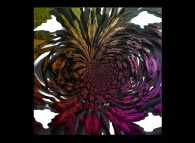
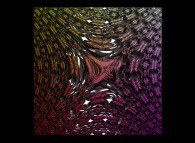
-
 :
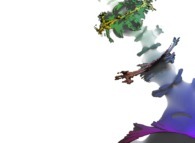
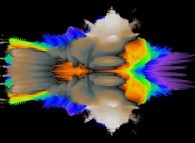
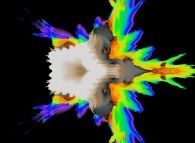
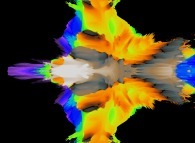
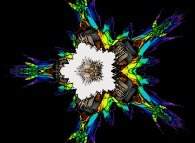
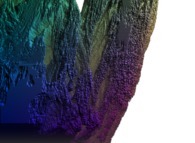
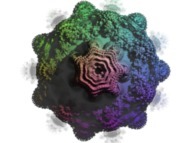
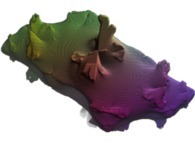
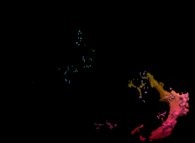
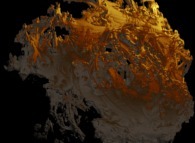
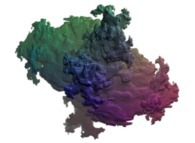
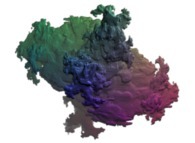
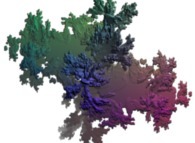
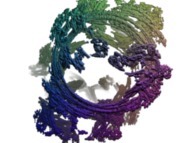
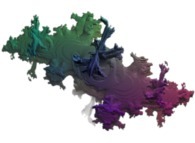
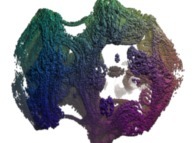
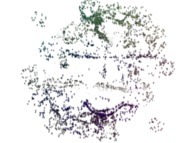
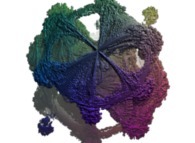
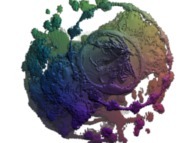
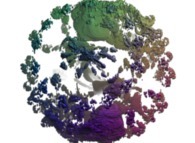
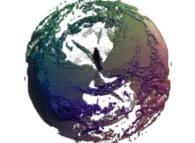
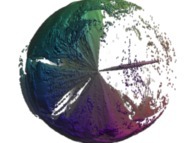
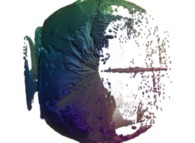
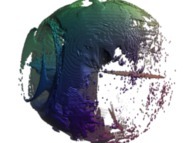
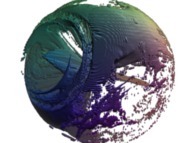
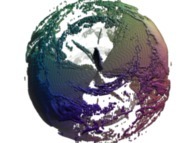
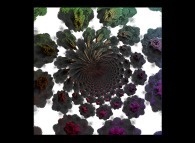
this Mandelbrot set is a tridimensional cross-section
(using the t=0 hyperplane) and was computed with
a polynomial 'P' of the first degree and the following four functions:
:
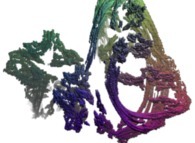
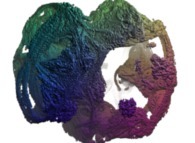
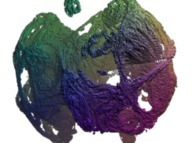
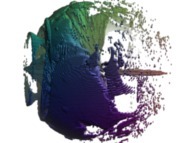
this Mandelbrot set is a tridimensional cross-section
(using the t=0 hyperplane) and was computed with
a polynomial 'P' of the first degree and the following four functions:
                    P(q) = 1*q + q
                                  C
                                       2
                    fR(R ,R ) = (R *R )
                        1  2      1  2
                    fT(T ,T ) = 2*(T +T )
                        1  2        1  2
                    fP(P ,P ) = 2*(P +P )
                        1  2        1  2
                    fA(A ,A ) = 2*(A +A )
                        1  2        1  2
-

 :
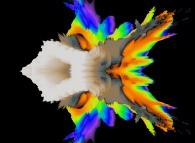
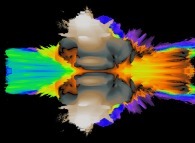
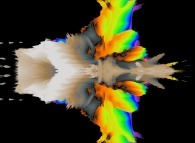
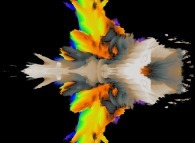
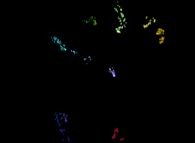
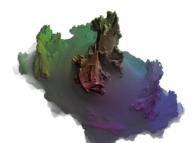
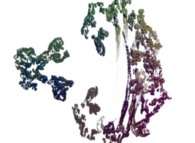
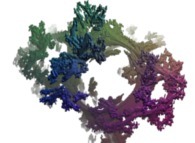
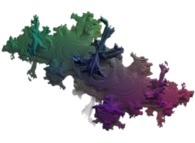
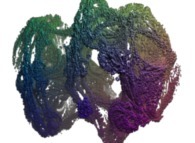
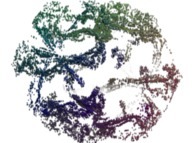
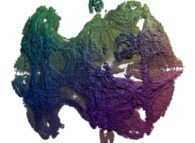
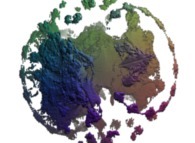
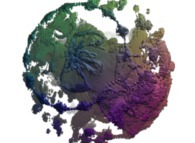
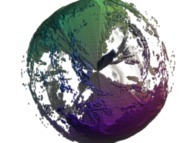
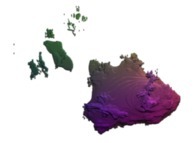
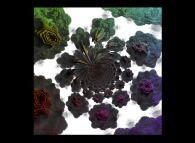
this Mandelbrot set is a tridimensional cross-section
(using the t=0.1 hyperplane) and was computed with
a polynomial 'P' of the second degree and the following four functions:
:
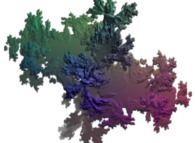
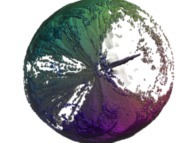
this Mandelbrot set is a tridimensional cross-section
(using the t=0.1 hyperplane) and was computed with
a polynomial 'P' of the second degree and the following four functions:
                            2
                    P(q) = q  + q
                                 C
                    fR(R ,R ) = R *R
                        1  2     1  2
                    fT(T ,T ) = 2*(T +T ) + pi
                        1  2        1  2
                    fP(P ,P ) = 2*(P +P ) + pi
                        1  2        1  2
                    fA(A ,A ) = A +A
                        1  2     1  2
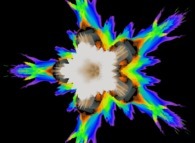
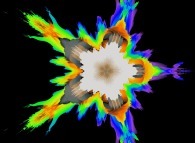
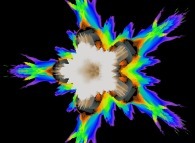
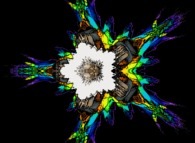
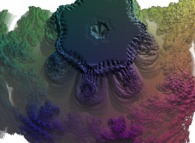
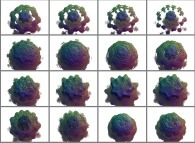
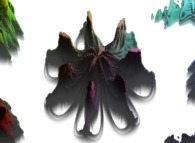
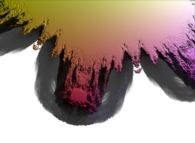
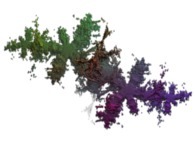
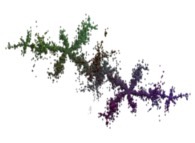
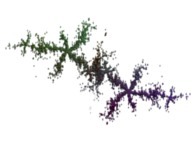
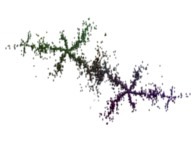
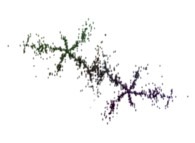
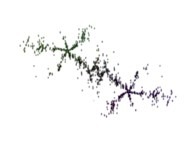
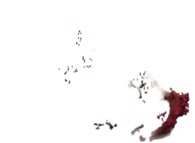
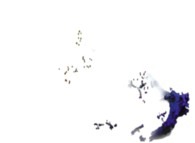
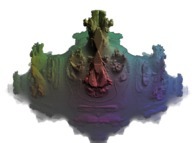
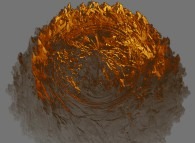
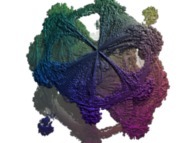
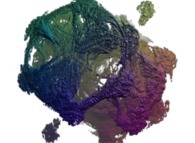
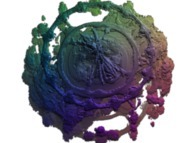
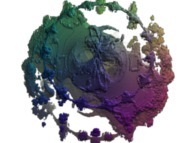
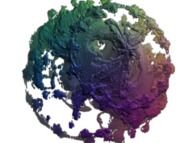
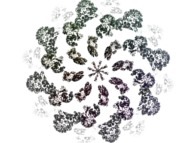
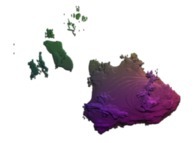
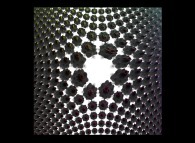
Its bird's-eye view  looks like a snow flake
with 5 spikes. It was computed using a polynomial 'P' of the second degree.
For polynomials of the third, fourth, fifth and sixth degree,
the numbers of spikes are
13 (=5*2+3),
29 (=13*2+3),
61 (=29*2+3) and
125 (=61*2+3) respectively.
looks like a snow flake
with 5 spikes. It was computed using a polynomial 'P' of the second degree.
For polynomials of the third, fourth, fifth and sixth degree,
the numbers of spikes are
13 (=5*2+3),
29 (=13*2+3),
61 (=29*2+3) and
125 (=61*2+3) respectively.
-
 :
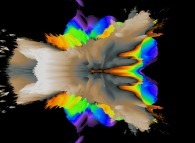
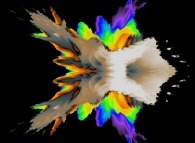
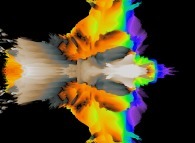
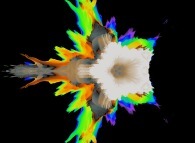
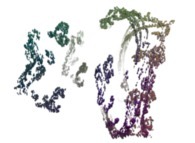
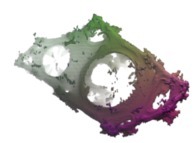
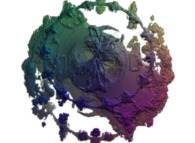
this Mandelbrot set is a tridimensional cross-section
(using the t=0 hyperplane) and was computed with
a polynomial 'P' of the eighth degree and the following four functions:
:
this Mandelbrot set is a tridimensional cross-section
(using the t=0 hyperplane) and was computed with
a polynomial 'P' of the eighth degree and the following four functions:
                            8
                    P(q) = q  + q
                                 C
                    fR(R ,R ) = R *R
                        1  2     1  2
                    fT(T ,T ) = 1*(T +T ) + pi
                        1  2        1  2
                    fP(P ,P ) = 2*(P +P ) + pi
                        1  2        1  2
                    fA(A ,A ) = A +A
                        1  2     1  2
-
 :
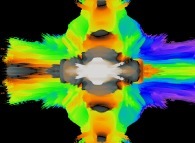
this Mandelbrot set is a tridimensional cross-section
(using the t=0 hyperplane) and was computed with
a polynomial 'P' of the second degree and the following four functions:
:
this Mandelbrot set is a tridimensional cross-section
(using the t=0 hyperplane) and was computed with
a polynomial 'P' of the second degree and the following four functions:
                            2
                    P(q) = q  + q
                                 C
                    fR(R ,R ) = R *R
                        1  2     1  2
                    fT(T ,T ) = 1*(T +T ) + pi
                        1  2        1  2
                    fP(P ,P ) = 2*(P +P ) + pi
                        1  2        1  2
                    fA(A ,A ) = A +A
                        1  2     1  2
-
 :
this Mandelbrot set is a tridimensional cross-section
(using the t=0 hyperplane) and was computed with
a polynomial 'P' of the first degree and the following four functions:
:
this Mandelbrot set is a tridimensional cross-section
(using the t=0 hyperplane) and was computed with
a polynomial 'P' of the first degree and the following four functions:
                    P(q) = 1*q + q
                                  C
                                       8
                    fR(R ,R ) = (R *R )
                        1  2      1  2
                    fT(T ,T ) = 8*(T +T )
                        1  2        1  2
                    fP(P ,P ) = 8*(P +P )
                        1  2        1  2
                    fA(A ,A ) = 8*(A +A )
                        1  2        1  2
-
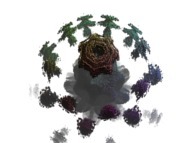 :
this Mandelbrot set is a tridimensional cross-section
(using the t=0.7 hyperplane) and was computed with
a polynomial 'P' of the first degree and the following four functions:
:
this Mandelbrot set is a tridimensional cross-section
(using the t=0.7 hyperplane) and was computed with
a polynomial 'P' of the first degree and the following four functions:
                    P(q) = 1*q + q
                                  C
                                       8
                    fR(R ,R ) = (R *R )
                        1  2      1  2
                    fT(T ,T ) = 8*(T +T )
                        1  2        1  2
                    fP(P ,P ) = 8*(P +P )
                        1  2        1  2
                    fA(A ,A ) = 8*(A +A )
                        1  2        1  2
-
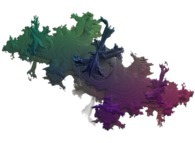 :
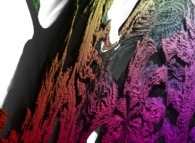
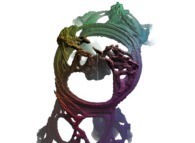
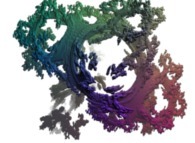
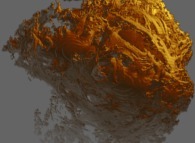
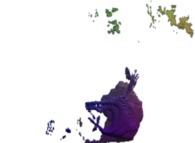
this Julia set is a tridimensional cross-section
(using the t=0 hyperplane) and was computed with
a polynomial 'P' of the second degree and the following four functions:
:
this Julia set is a tridimensional cross-section
(using the t=0 hyperplane) and was computed with
a polynomial 'P' of the second degree and the following four functions:
                            2
                    P(q) = q  + {-0.5815147625160462,+0.6358885017421603,0,0}
                    fR(R ,R ) = R *R
                        1  2     1  2
                    fT(T ,T ) = T +T
                        1  2     1  2
                    fP(P ,P ) = P +P
                        1  2     1  2
                    fA(A ,A ) = A +A
                        1  2     1  2
-
 :
this Julia set is a tridimensional cross-section
(using the t=0 hyperplane) and was computed with
a polynomial 'P' of the first degree and the following four functions:
:
this Julia set is a tridimensional cross-section
(using the t=0 hyperplane) and was computed with
a polynomial 'P' of the first degree and the following four functions:
P(q) = 1*q + {-0.5815147625160462,+0.6358885017421603,0,0}
                                       3
                    fR(R ,R ) = (R *R )
                        1  2      1  2
                    fT(T ,T ) = 3*(T +T )
                        1  2        1  2
                    fP(P ,P ) = 3*(P +P )
                        1  2        1  2
                    fA(A ,A ) = A +A
                        1  2     1  2
-
 :
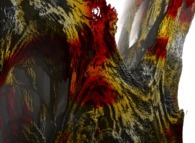
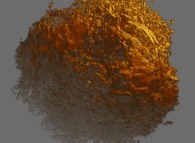
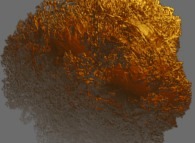
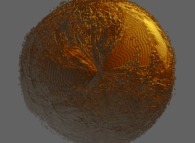
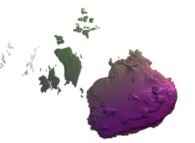
this Julia set is a tridimensional cross-section
and was computed with
a polynomial 'P' of the first degree and the following four functions
('Fractal(x,y,z,t)' is a non deterministic fractal function with value
inside [2,12] identical to the ones that are used
to generate and animate mountains and clouds):
:
this Julia set is a tridimensional cross-section
and was computed with
a polynomial 'P' of the first degree and the following four functions
('Fractal(x,y,z,t)' is a non deterministic fractal function with value
inside [2,12] identical to the ones that are used
to generate and animate mountains and clouds):
P(q) = 1*q + {0,1,0,0}
                                       Fractal(x,y,z,t)
                    fR(R ,R ) = (R *R )
                        1  2      1  2
                    fT(T ,T ) = 5*(T +T )
                        1  2        1  2
                    fP(P ,P ) = 8*(P +P )
                        1  2        1  2
                    fA(A ,A ) = 11*(A +A )
                        1  2         1  2
It is an original mixing between deterministic and non deterministic fractals.
-
 :
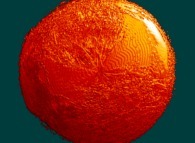
this Julia set is a tridimensional cross-section
and was computed with
a polynomial 'P' of the first degree and the following four functions
('Fractal(x,y,z,t)' is a non deterministic fractal function with value
inside [2,12] identical to the ones that are used
to generate and animate mountains and clouds):
:
this Julia set is a tridimensional cross-section
and was computed with
a polynomial 'P' of the first degree and the following four functions
('Fractal(x,y,z,t)' is a non deterministic fractal function with value
inside [2,12] identical to the ones that are used
to generate and animate mountains and clouds):
P(q) = 1*q + {0,1,0,0}
                                       Fractal(x,y,z,t)
                    fR(R ,R ) = (R *R )
                        1  2      1  2
                    fT(T ,T ) = Fractal(x,y,z,t)*(T +T )
                        1  2                       1  2
                    fP(P ,P ) = Fractal(x,y,z,t)*(P +P )
                        1  2                       1  2
                    fA(A ,A ) = Fractal(x,y,z,t)*(A +A )
                        1  2                       1  2
It is an original mixing between deterministic and non deterministic fractals.
-
 :
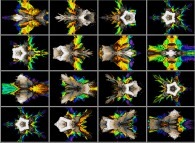
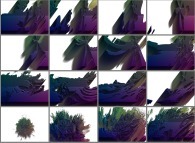
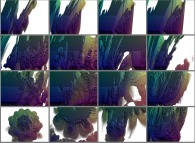
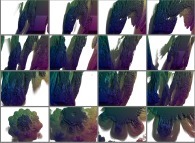
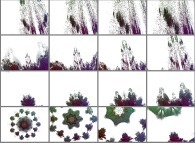
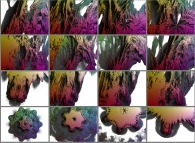
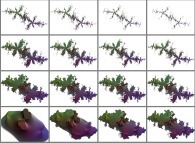
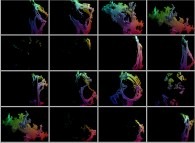
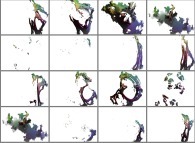
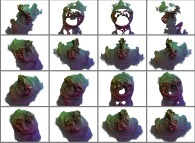
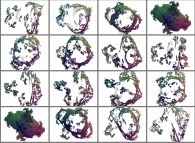
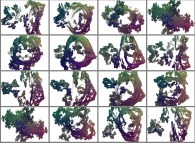
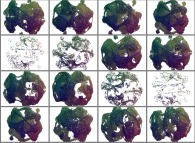
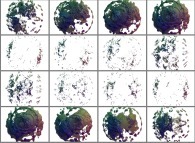
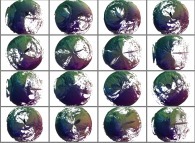
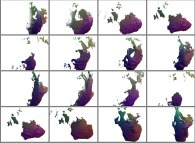
This metamorphosis made of sixteen pictures is obtained using a rotation
in the quadridimensional space of the tridimensional cross-section
inside a Julia set computed with
a polynomial 'P' of the first degree and the following four functions:
:
This metamorphosis made of sixteen pictures is obtained using a rotation
in the quadridimensional space of the tridimensional cross-section
inside a Julia set computed with
a polynomial 'P' of the first degree and the following four functions:
P(q) = 1*q + {-0.5815147625160462,+0.6358885017421603,0,0}
                                       2
                    fR(R ,R ) = (R *R )
                        1  2      1  2
                    fT(T ,T ) = 2*(T +T )
                        1  2        1  2
                    fP(P ,P ) = 2*(P +P )
                        1  2        1  2
                    fA(A ,A ) = 2*(A +A )
                        1  2        1  2
-
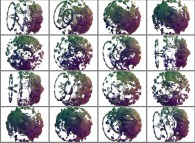 :
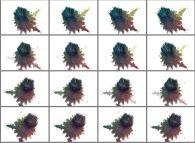
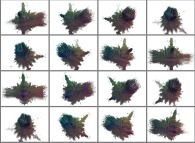
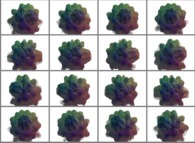
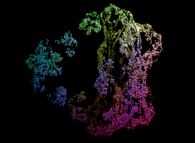
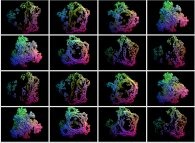
This metamorphosis made of sixteen pictures is obtained using a rotation
in the quadridimensional space of the tridimensional cross-section
inside a Julia set computed with
a polynomial 'P' of the third degree and the following four functions:
:
This metamorphosis made of sixteen pictures is obtained using a rotation
in the quadridimensional space of the tridimensional cross-section
inside a Julia set computed with
a polynomial 'P' of the third degree and the following four functions:
                                  2    3
                    P(q) = 1*q - q  + q  + {-0.5815147625160462,+0.6358885017421603,0,0}
                                       2
                    fR(R ,R ) = (R *R )
                        1  2      1  2
                    fT(T ,T ) = 2*(T +T )
                        1  2        1  2
                    fP(P ,P ) = 2*(P +P )
                        1  2        1  2
                    fA(A ,A ) = 2*(A +A )
                        1  2        1  2

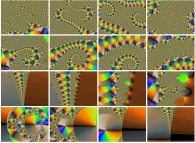
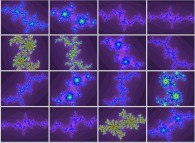
 and of a Julia set
 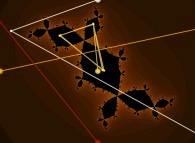 .
.
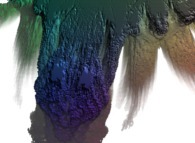
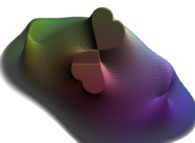
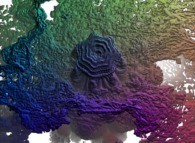
![Tridimensional display of the Z=Zeta(Z)iteration inside [-20.0,+20.0]x[-20.0,+20.0] (bird's-eye view)](../images/ITZE.11.m.D/timbre.jpg "Tridimensional display of the Z=Zeta(Z) iteration inside [-20.0,+20.0]x[-20.0,+20.0] (bird's-eye view)") .
.
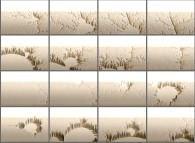 .
.
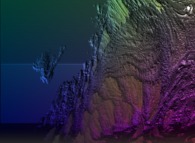
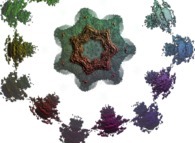
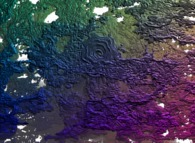
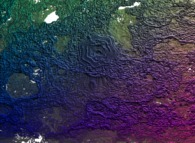
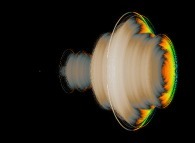 exhibits a high symmetry and no tridimensional structures at all levels as expected
as can be seen with this zooming in
exhibits a high symmetry and no tridimensional structures at all levels as expected
as can be seen with this zooming in 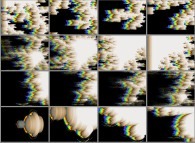 .
.